At the wonderful conference and double art exhibition Plant Fever in Copenhagen, art historians, ethnologists, botanists, historians of science and a few literary scholars gathered to discuss the role of houseplants in human life and cultural production.
With my spider plant research partner, I presented a comparison of three Chinese stories featuring houseplants as partners in more-than-human romantic relationships.
First, I looked at how the unspectacular, flowerless “green plant 绿叶植物” in Chen Cun’s 陈村 novel Fresh Flowers And 鲜花和 (1997) embodies the surprising resilience of the unconventional relationship between single dad Yang Se and career woman Jiji. (I wrote about this in the chapter “Flora Nostalgia” in Sensing the Sinophone.)
Second, I analysed Chang Kuei-hsing’s 張貴興 I Miss My South Seas Sleeping Beauty 我思念的長眠中的南國公主 (2001) in which the protagonist’s mother forms an alliance with her garden to take revenge on a manthropocentric worldview that sees women and nature as resources to be used and abused. (This comes from a chapter on rainforest literature I’m writing for my book project on plants in Sinophone fiction.)
Finally, I turned to Yan Ge’s 颜歌 “Flourishing Beasts” 荣华兽 (2017) – a story of treelike female creatures that are grown for their beauty and turned into expensive furniture upon maturation. The story turns feminised flower symbolism that glosses plants and women as passive, ornamental commodities for the male gaze on its head when the hybrid protagonist bites off the tongue of her owner/lover – making him the silent one in their relationship. (This is part of an essay on plant-human chimeras in speculative Chinese fiction I’ve just finished for the forthcoming volume Posthuman Fabulations, edited by Carlos Rojas and Mingwei Song.)
In all three instances, houseplants expand the range of romantic possibilities (including escape) and help their human partners exceed societal and gendered relationship expectations.
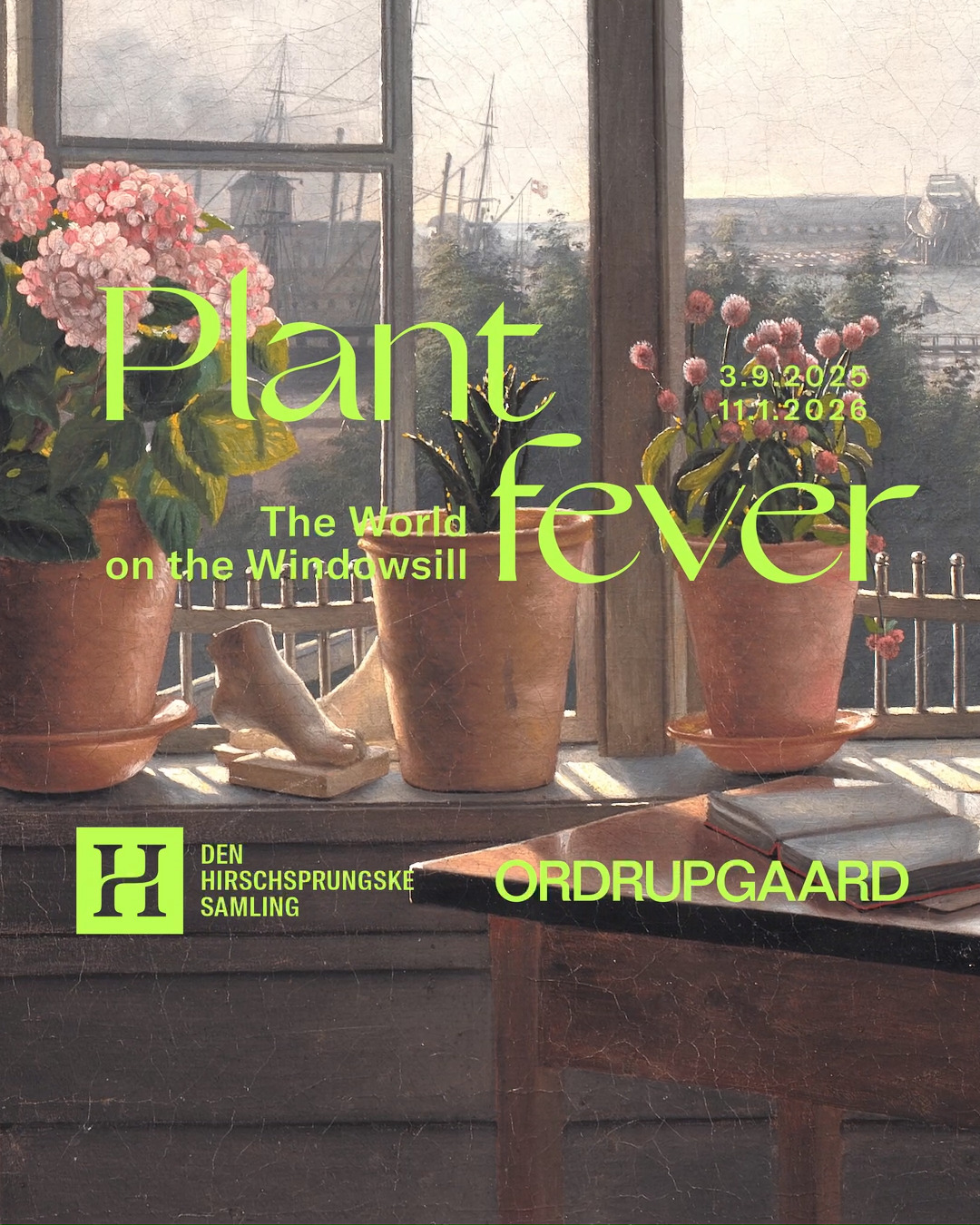
The Plant Fever conference was organized in conjunction with the exhibition Plant Fever: The World on the Windowsill at The Hirschsprung Collection and Ordrupgaard. Hosted by the research project Hidden Plant Stories (Aarhus University, Ordrupgaard and The Hirschsprung Collection) supported by the Velux Foundation. Collaborating partners: Natural History Museum Denmark, Center for Practice-based Art Studies (University of Copenhagen), the research programme Environmental Media and Aesthetics (Aarhus University). Organising team: Anette Vandsø, Nick Shepherd, Martha Fleming, conference secretary Martin Bjerg Dahl and conference assistant Mathias Bækhøj Karlberg.
 小说 XIAOSHUO 小說
Leave a comment