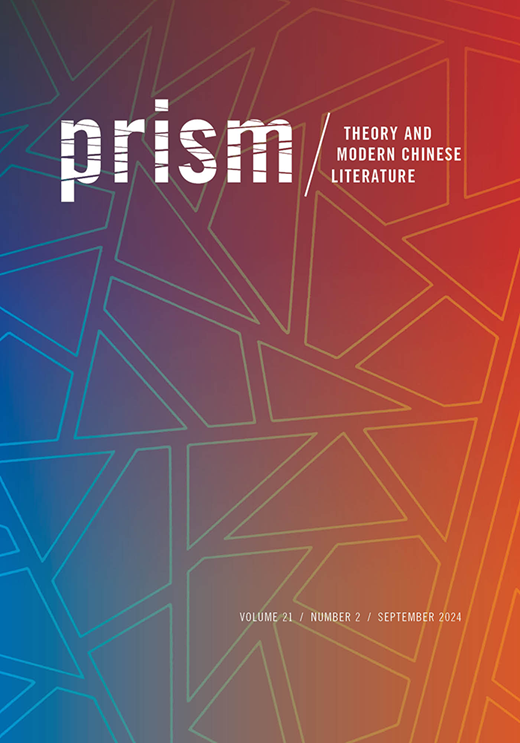
“Space Oceans: Posthuman Frontier Feminism in the Astro-nautical Hydrocommons.”
Transposing Astrida Neimanis’s idea of “the hydrocommons of wet relations” to the oceans of outer space, this article analyses sci-fi stories by Chi Hui 迟卉, Regina Kanyu Wang’s 王侃瑜, and Hu Shaoyan’s 胡绍晏 from a posthuman feminist perspective.
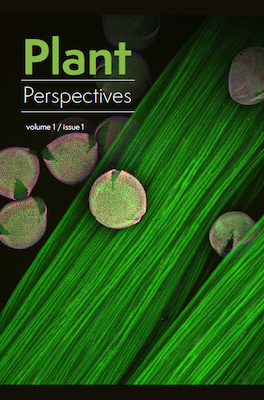
“Companion Plant Reading: Translating Vegetal Voices.”
Plant Perspectives 1, 2024: 120-144.
By planting together texts in Chinese, Danish and English intermingled with the idiom of plants, I propose messy, multimodal and multilingual translation as a fundamental figuration in our pursuit of a planetary approach to comparative literature.
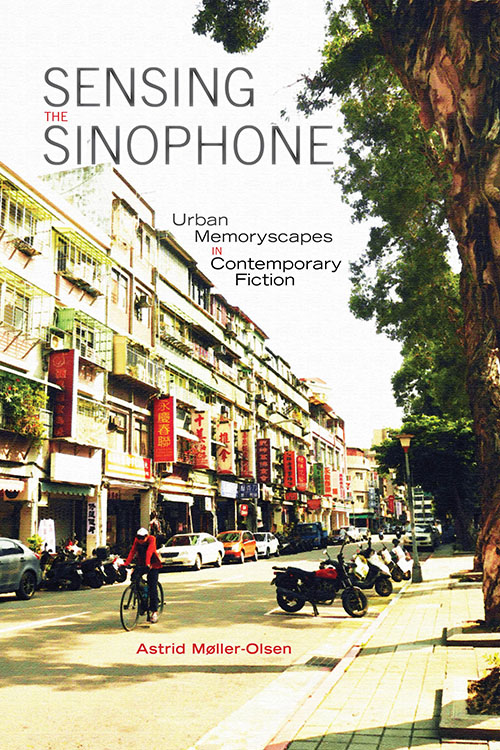
Sensing the Sinophone:
Urban Memoryscapes in Contemporary Fiction.
Cambria Press: 2022.
“This is a nuanced, original study of literary representations of memory in relation to time, space, and sensory experiences in three contemporary global cities: Shanghai, Taipei, and Hong Kong. Not only does it break new ground in several fields (Chinese studies, comparative literature, urban studies), but it also makes a powerful case for the lasting human value of literature.”
—Michelle Yeh, UC Davis
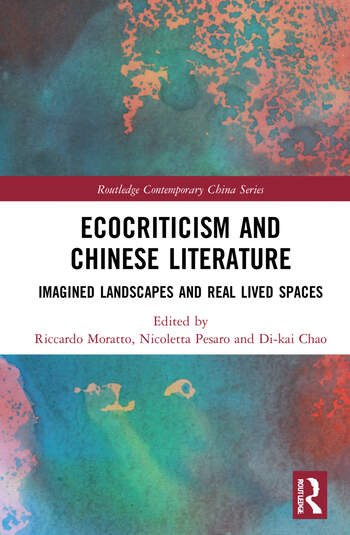
“Trees Keep Time: An Ecocritical Approach to Literary Temporality.”
Ecocriticism and Chinese Literature.
Eds. Riccardo Moratto, Nicoletta Pesaro, Di-kai Chao. Routledge: 2022.
Through a conceptualisation of qingjing (情境) that relates literary temporality to emotional interaction with the environment through the figure of the tree, this chapter executes a thematic comparison of arboreal figures in three works of contemporary Sinophone fiction, demonstrating how trees, as keepers of time, form an ecocritical approach to the study of narrative temporality.
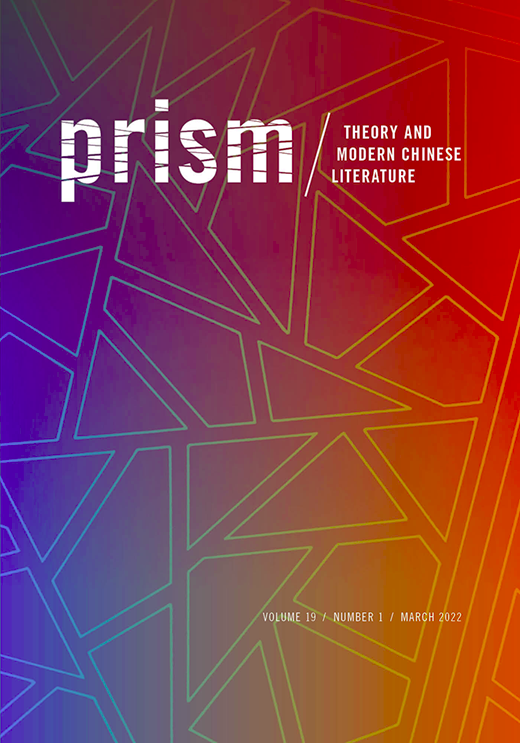
Prism: Theory and Modern Chinese Literature 19 (1), 2022: 1–5.
In this themed cluster on urban space-time in twenty-first-century Sinophone film and fiction, we encounter wandering flats, ghostly spaces, and nostalgic fantasies that foster an interpretation of space and time as fundamentally entangled in the city, as well as an understanding that such spatiotemporal structures are often unpredictable and inherently mutable.
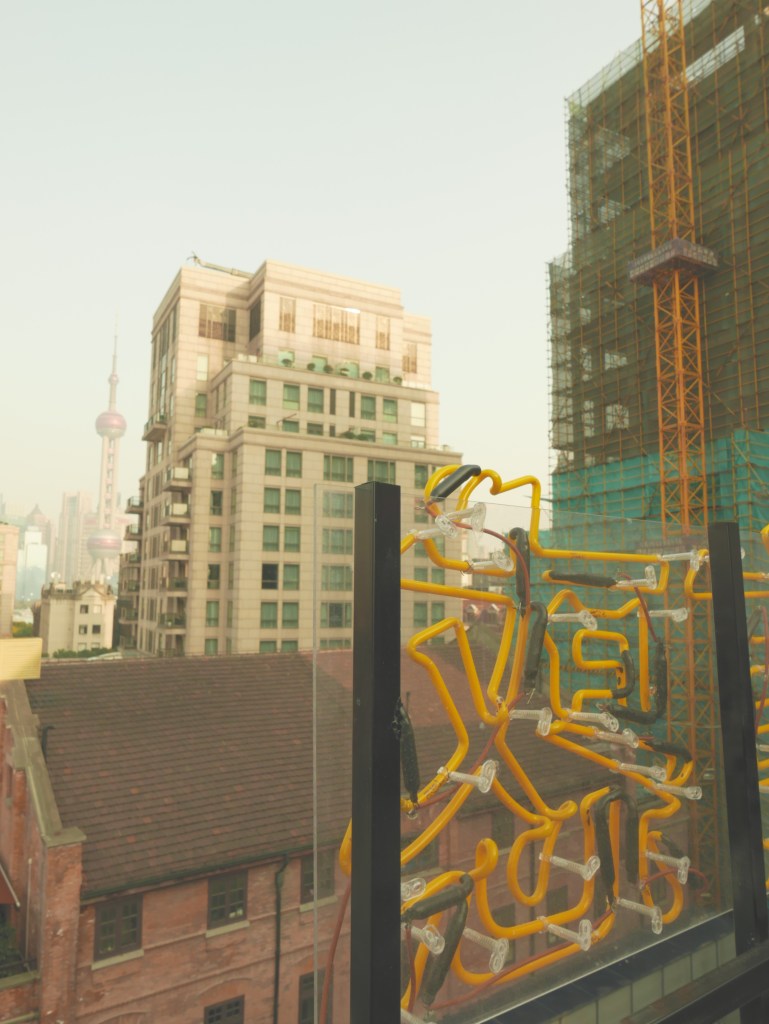
“Take the Elevator to Tomorrow: Mobile Space and Lingering Time in Contemporary Urban Fiction.”
Prism: Theory and Modern Chinese Literature 19 (1), 2022: 86-101.
In a comparative study of Taiwanese author Wu Mingyi’s short story “The Ninety-Ninth Floor” and Hong Kong writer Dorothy Tse’s “Mute Doors,” this article proposes the term time-space as a suitable concept for dealing with discrete sections of space-time in literature and goes on to explore the elevator as a prime example
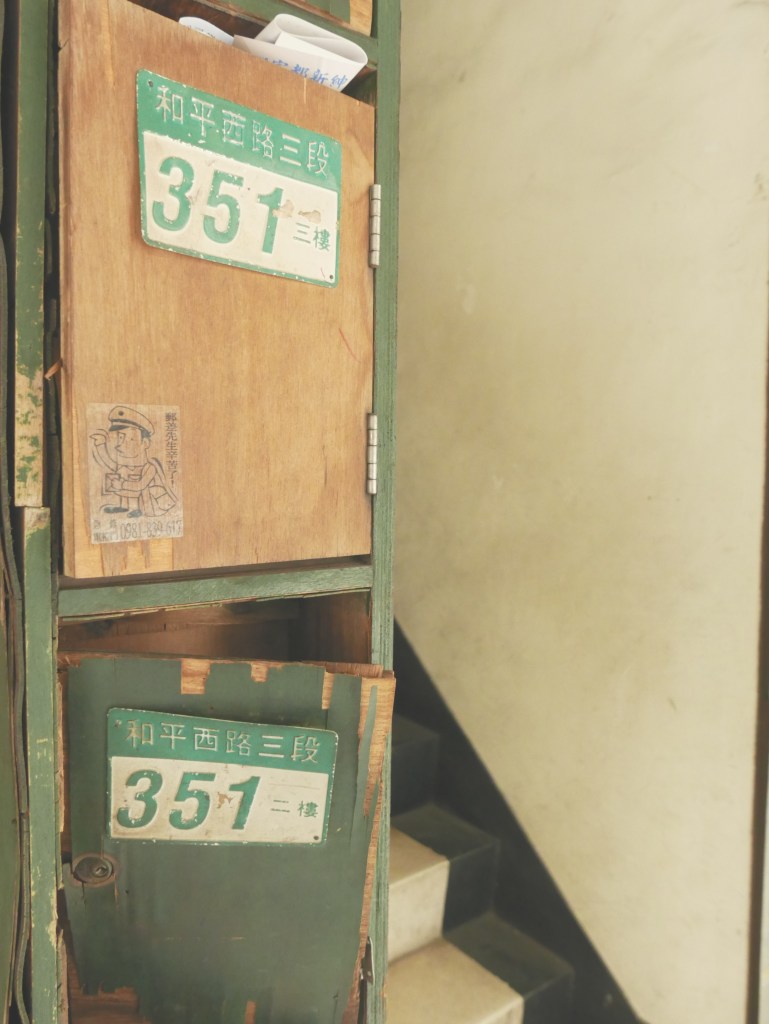
“The city is a journey: heritage and memory in Zhu Tianxin’s novella The Old Capital.”
International Journal of Heritage Studies 27 (8) 2021: 819-829.
Inspired by David Crouch’s conception of heritage as a journey, this paper looks at how the protagonist’s physical and mental voyage in Chu Tien-hsins novel The Old Capital incorporates several spatiotemporal layers of cultural heritage to help her – and the reader – understand the complexity of the living historical city of Taipei.
“Sounding the Dream: Crosscultural Reverberations between Can Xue and Jorge Luis Borges.”
Canadian Review of Comparative Literature /
Revue Canadienne de Littérature Comparée 47 (4), 2020: 463-479.
A look at how traces of Zhuangzi’s butterfly dream appear in the oneiric fictions of Argentinian writer Jorge Luis Borges, and how, in turn, Borges’ dream-worlds have inspired Chinese author Can Xue to create a new kind of literary dreamscape.

“Data Narrator: Digital Chronotopes in Contemporary Chinese Science Fiction.”
SFRA Review 50 (2-3) 2020, Special Issue: Alternative Sinofuturisms (中华未来主义).
Reading Liu Cixins use of virtual reality as world simulation in The Three Body Problem with Tang Fei’s portrayal of an “ocean of data” as the source of all stories in “Call Girl” and Ma Boyong’s Orwellian narrative
“The City of Silence” where all interpersonal communication is carried out soundlessly via strictly censored online forums,
I use spatiotemporal concepts to analyze digital realities as alternative, parallel spacetimes that afford imaginary arenas for experimentation, escape, and control.

Seven Senses of the City: Urban Spacetime and Sensory Memory in Contemporary Sinophone Fiction.
(PhD dissertation)
Lund University: 2020.
What happens when the city you live in changes over night? When the streets and neighborhoods that form the material counterpart to your mental soundtrack of memory suddenly cease to exist? The rapidly changing cityscapes of Taipei, Hong Kong and Shanghai form an environment of urban flux that causes such questions to surface in literary texts.
“Fictional Dictionaries: Power and Philosophy of Language in Contemporary Chinese Fiction.”
Modern Chinese Literature and Culture 29 (2) 2017: 66-108.
This essay compares Han Shaogong’s A Dictionary of Maqiao, Yu Hua’s China in Ten Words, and Xiaolu Guo’s A Concise Chinese-English Dictionary for Lovers from the perspective of philosophy of language. Drawing on Wittgenstein’s concept of language games, Zhuangzi’s therapeutic skepticism and J. L. Austin’s theory of speech acts, the essay includes analyses of propaganda as linguistic magic, relexicalization as subversive activism, and human relationships as acts of translation.
“Dissolved in Liquor and Life: Drinkers and Drinking Cultures in Mo Yan’s Novel Liquorland.”
Commensality: From Everyday Food to Feast. Edited by Kerner, Chou, Warmind. Bloomsbury, 2015.
Inspired by Roland Barthes, this chapter identifies and investigates three alcohol ‘institutions’ in Mo Yan’s novel Liquorland 酒国 from 1992:
commensal drinking, poetic drinking
and heroic drinking.
“Den Daoistiske Ædedolk: Daoisme og Spisning i Ah Chengs Novelle ‘Kongen af Skak’ [The Daoist Glutton: Daoism and Eating in Ah Cheng’s Short Story ‘The King of Chess’].”
CHAOS 59 – Religion og Litteratur, 2013: 185-198.
By comparing the attitude towards eating in “The King of Chess” with material aspects of Daoism as found in the Zhuangzi, this paper presents an
analysis of how Ah Cheng uses food as a theme to communicate cultural values of early rustic Daoism outside the discourse of traditionalism.
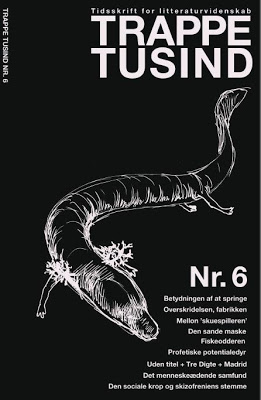
“Det Menneskeædende Samfund: Lu Xuns brug af Kannibalisme som Litterært Motiv [A Man-eating Civilization: Lu Xun’s use of Cannibalism as a Literary Motif].”
Trappe Tusind – Tidsskrift for Litteraturvidenskab 6, 2011.
 小说 XIAOSHUO 小說